

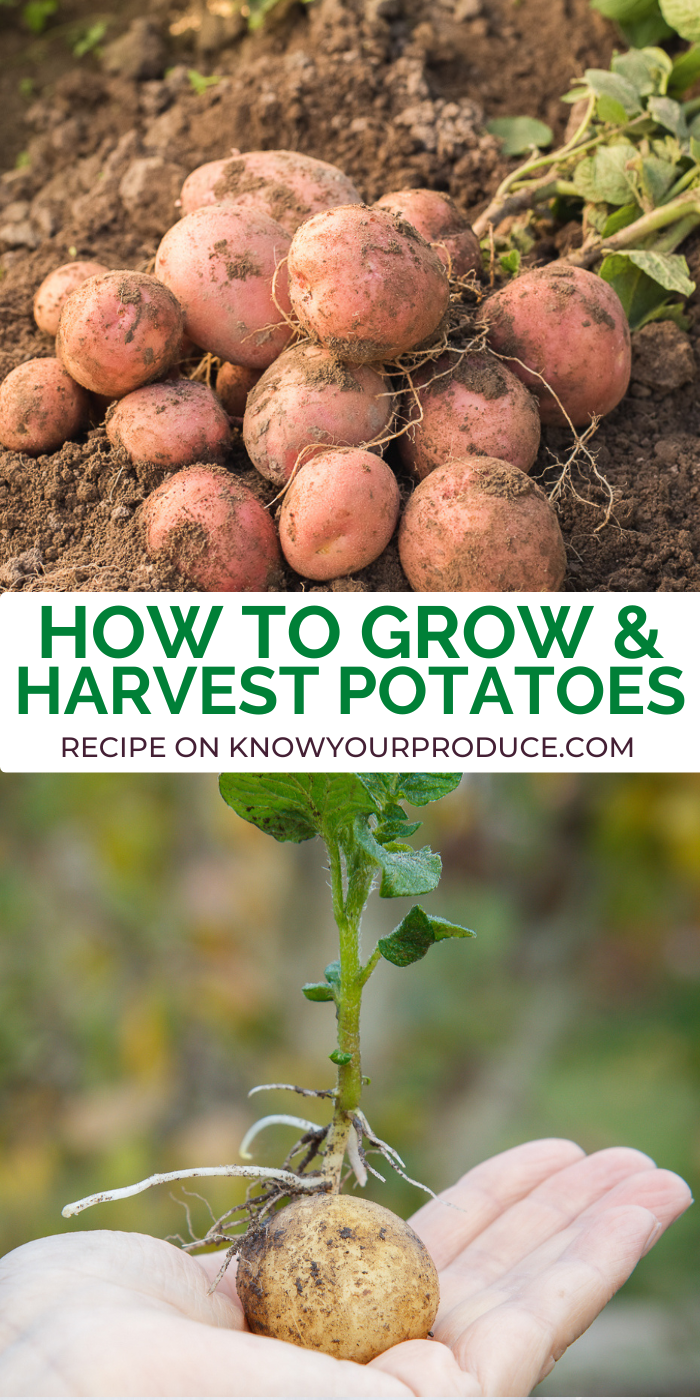

Learn how to grow potatoes in the spring or fall, how to grow potatoes in containers or potato grow bags and how to harvest potatoes too!
How to Grow Potatoes
Potatoes are a great addition to any garden, and for a good reason. They are an incredibly versatile vegetable and a favorite food among most families. There are several different ways of incorporating plants into your garden.
However, before you start planting potatoes, you must learn some basic facts. Our step-by-step guide will help you grow potatoes at home using any method that works best for your space.
How Long Does It Take To Grow Potatoes?
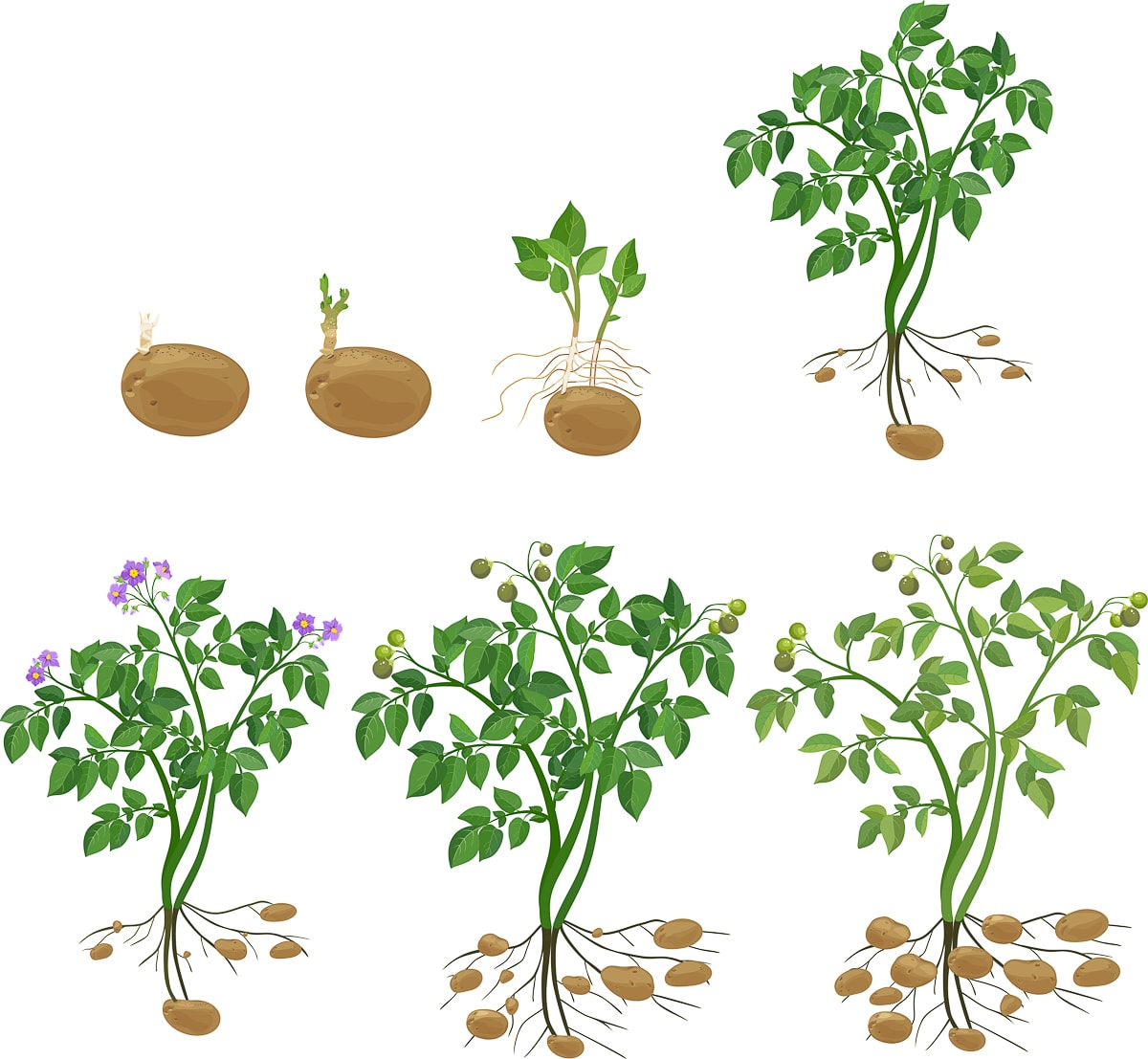
Typically, once planted, potatoes take three to four months or 80 to 110 days to grow. The length of time it takes will depend on the type of potato.
Potato Growth Timelines:
- Early-season potatoes: 70–90 days
- Mid-season potatoes: 90–110 days
- Late-season potatoes: 110–135 days
What Month Do You Plant Potatoes
Potatoes are typically planted in early spring, around late March to early April, depending on your climate. A good rule of thumb is to plant them 2 to 3 weeks before your last expected frost date, when the soil is workable and at least 45°F (7°C).
Can you plant potatoes in the fall?
It will depend on your area. We always recommend looking at the Almanac calendar for planting in your area.
How To Plant Potatoes
Potatoes are a rewarding crop for any gardener, and there are several ways to grow them. From raised beds to grow bags and containers, each method has its own approach, so it’s helpful to understand the differences before you get started.
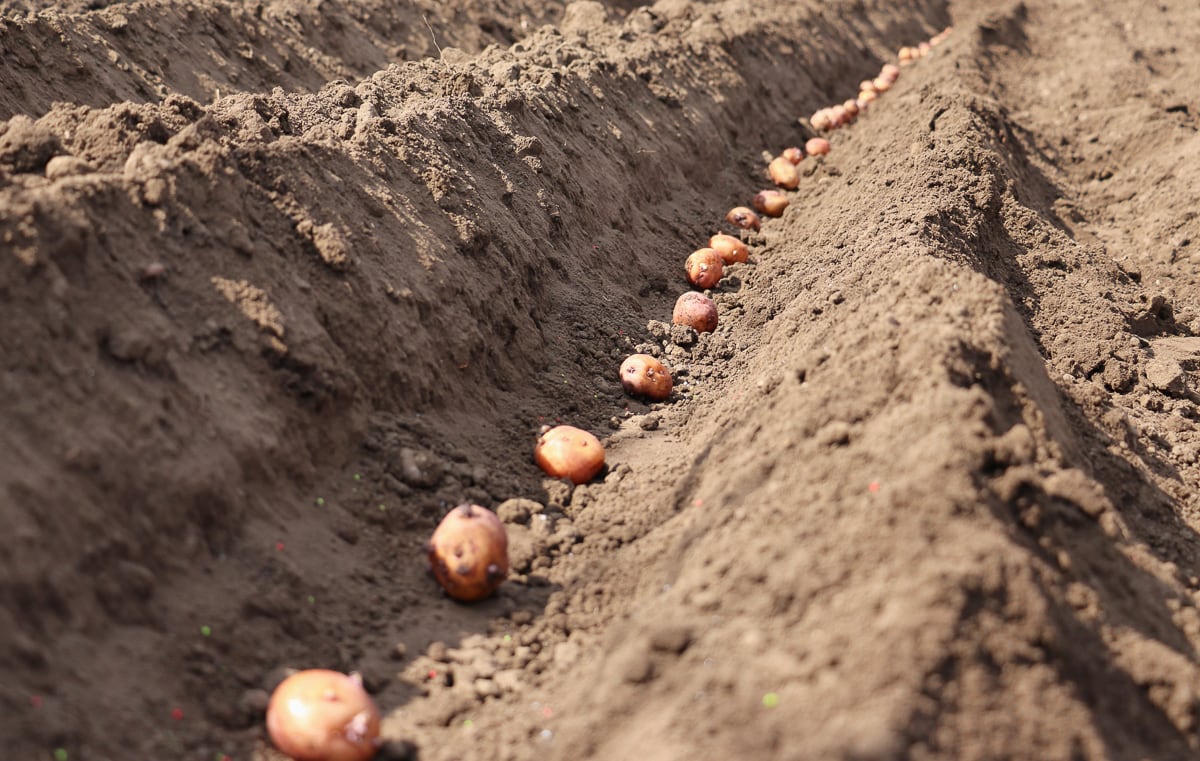
Can you plant a whole potato?
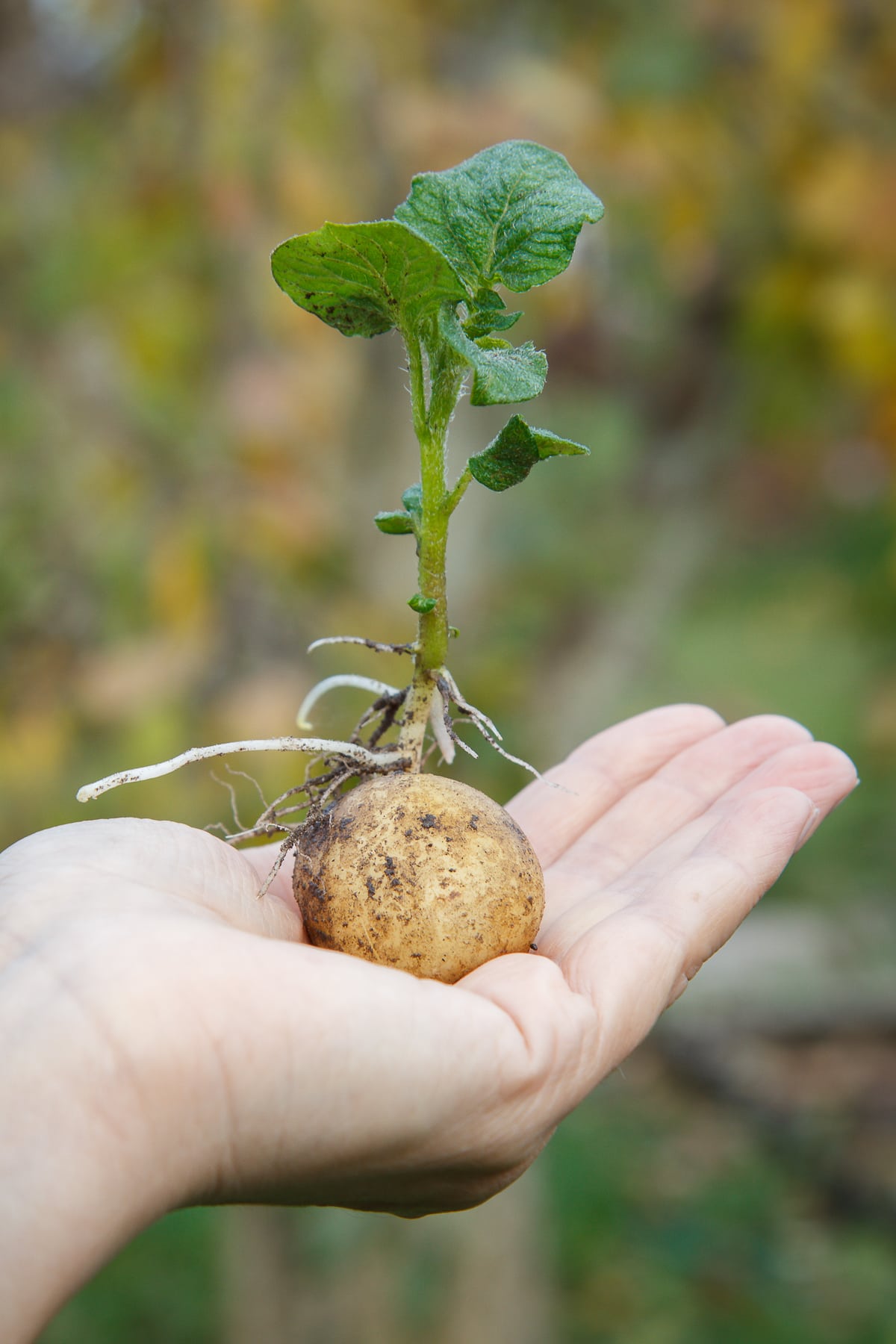
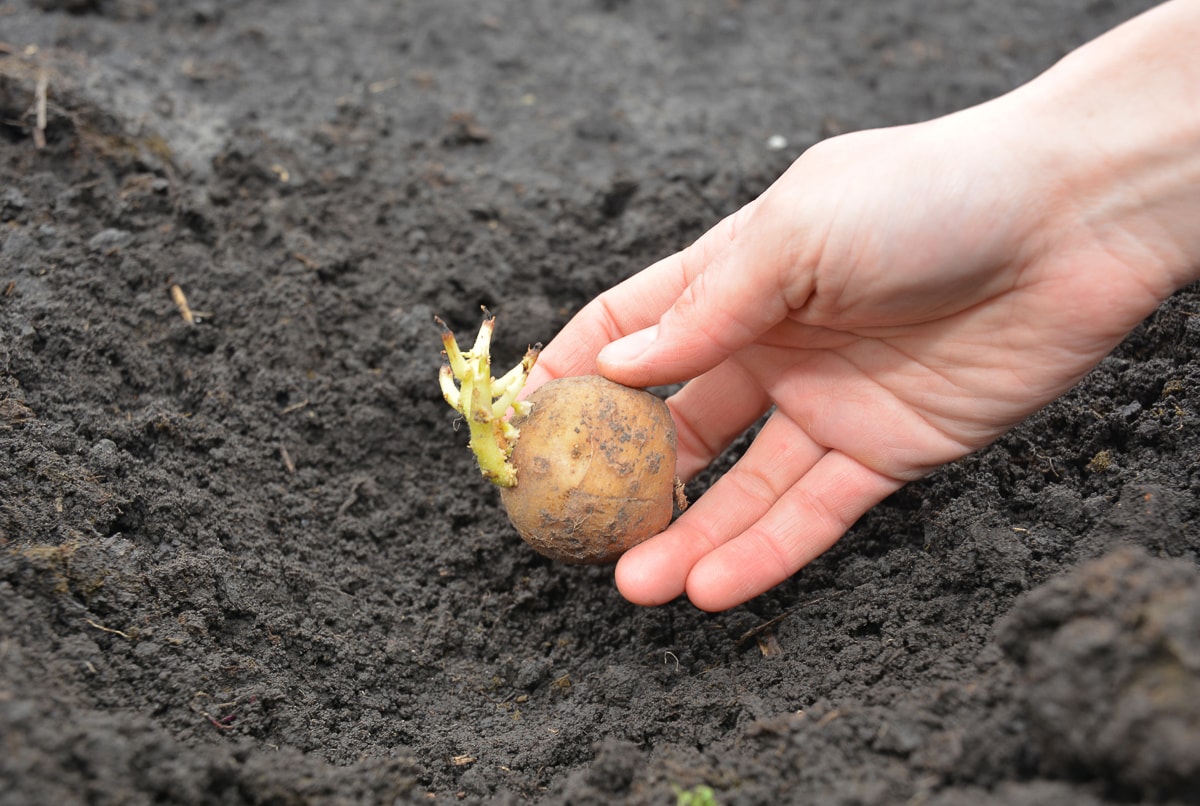
You can plant them whole, especially if your potatoes are already sprouted. Plant the sprouted potato directly into the ground.
No eyes (sprouts)? You may need to chit your potatoes. Chitting potatoes is just placing them in a sunny, cool spot to let them naturally sprout before planting.
Once the sprouts appear, you can either plant the whole potato or cut it into pieces, making sure each piece has at least one strong sprout (eye).
Cutting your potatoes can change your yield. It may produce more plants, but each plant might yield slightly fewer potatoes or smaller potatoes than planting the potatoes whole.
How To Grow Potatoes In A Bag
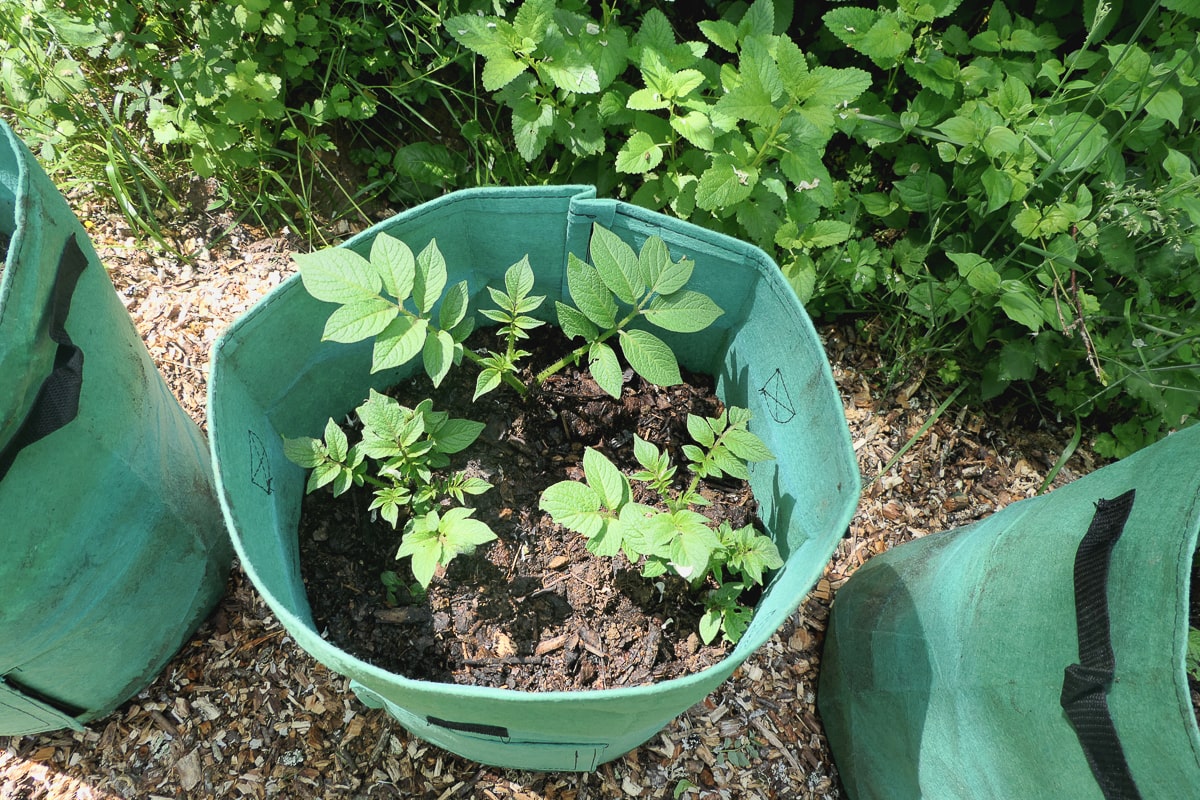
Growing potatoes in a bag is a simple and effective way to grow them, especially if you have limited space. It also makes it easier to harvest.
We recommend starting with a 10 to 15-gallon grow bag or container and filling it most of the way with potting mix, leaving about an inch from the top.
Plant your chitted or whole potatoes about 6 inches below the soil’s surface, with the sprouts facing up, and then cover them completely.
Another option is to fill your bag or bucket with about 6 to 10 inches of soil, plant your potatoes, then cover them with another 6 inches of soil. As the greens grow on top of the soil, add more soil to cover the stems, but make sure the leafy tops stay exposed.
Keep the bag in a sunny spot, water regularly to keep the soil moist but not soggy, and feed with fertilizer every few weeks if you’d like a better yield.
What’s the best fertilizer for potatoes?
A balanced fertilizer lower in nitrogen and higher in phosphorus and potassium works best for growing potatoes. Too much nitrogen can lead to lots of leafy growth, but we want to focus on growing potatoes!
Espoma Garden Tone is a great all-purpose option for garden vegetables and fruits. We also like using Bone Meal to support root development. The Dr. Earth line is another reliable choice with good organic options for root crops like potatoes.
How To Grow Potatoes In A Container
We highly recommend using grow bags instead of containers. If there’s no other options, plastic or ceramic can work in a pinch, but these types of containers can hold more moisture and heat, so you have to watch for soggy soil or overheating in hot weather.
How To Grow Potatoes In A Bucket
Growing potatoes in a bucket are similar to growing them in any other container. You will want to use a large bucket and follow the steps listed above. Use a lightweight soil mix and give your potatoes full sun without getting them too hot.
Do potatoes need full sun?
Potatoes will do best in full sun. Aim for at least 6 hours of full sun for your potato plants.
When should I stop watering my potato plant?
You should stop watering your potato plant when you see the vines starting to dry out.
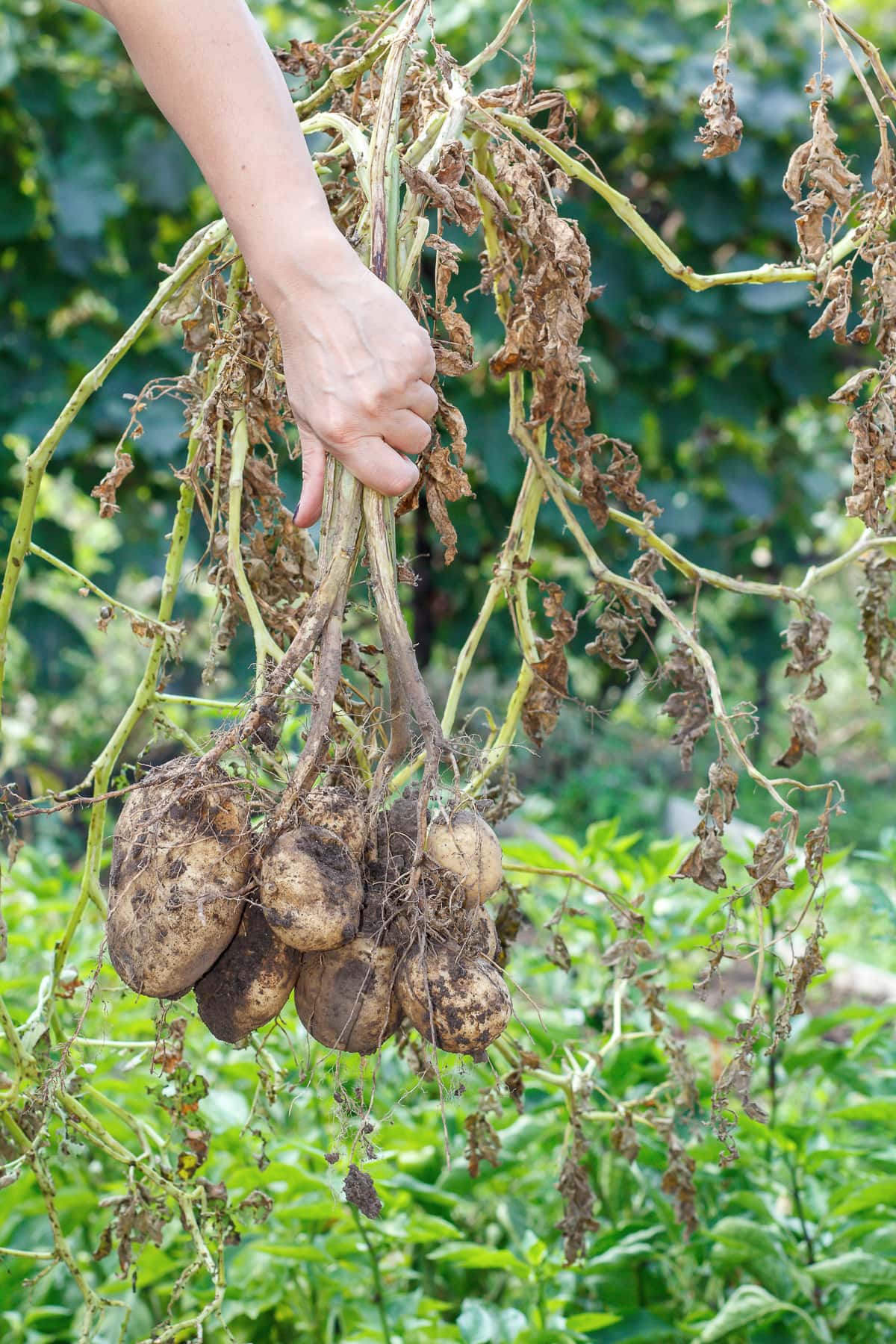
How many potatoes do you get per plant?
Depending on the type of potatoes you’ve planted, the amount of potatoes you get can vary. Typical yields for potatoes are 5-6 large potatoes per plant with a few smaller potatoes.
How to harvest potatoes and when
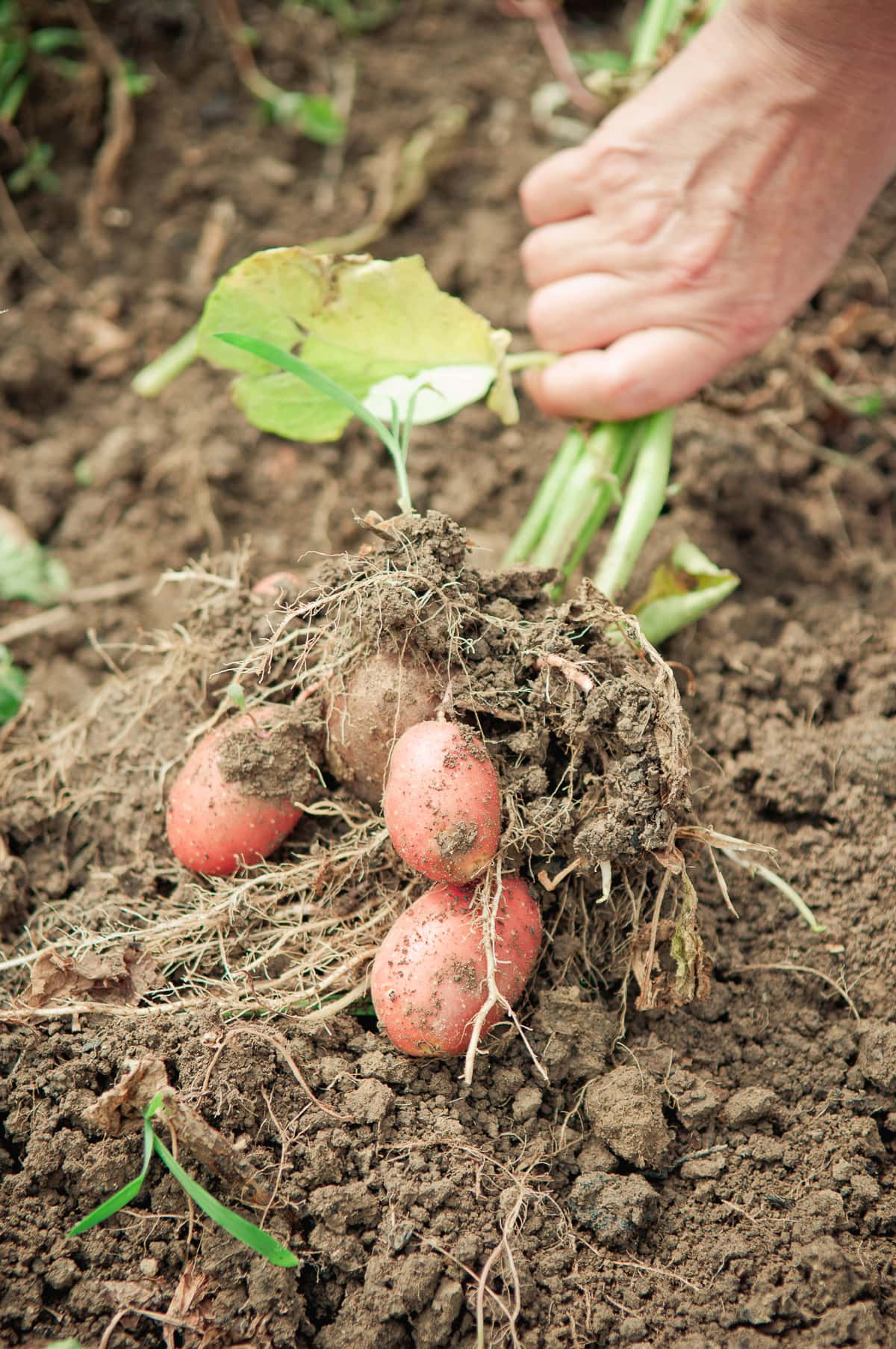
Wait for a dry day to harvest potatoes so the soil isn’t too heavy. When you’re ready, carefully dig through the soil by hand or with a small shovel, but avoid using anything too sharp since it can bruise or puncture the potatoes.
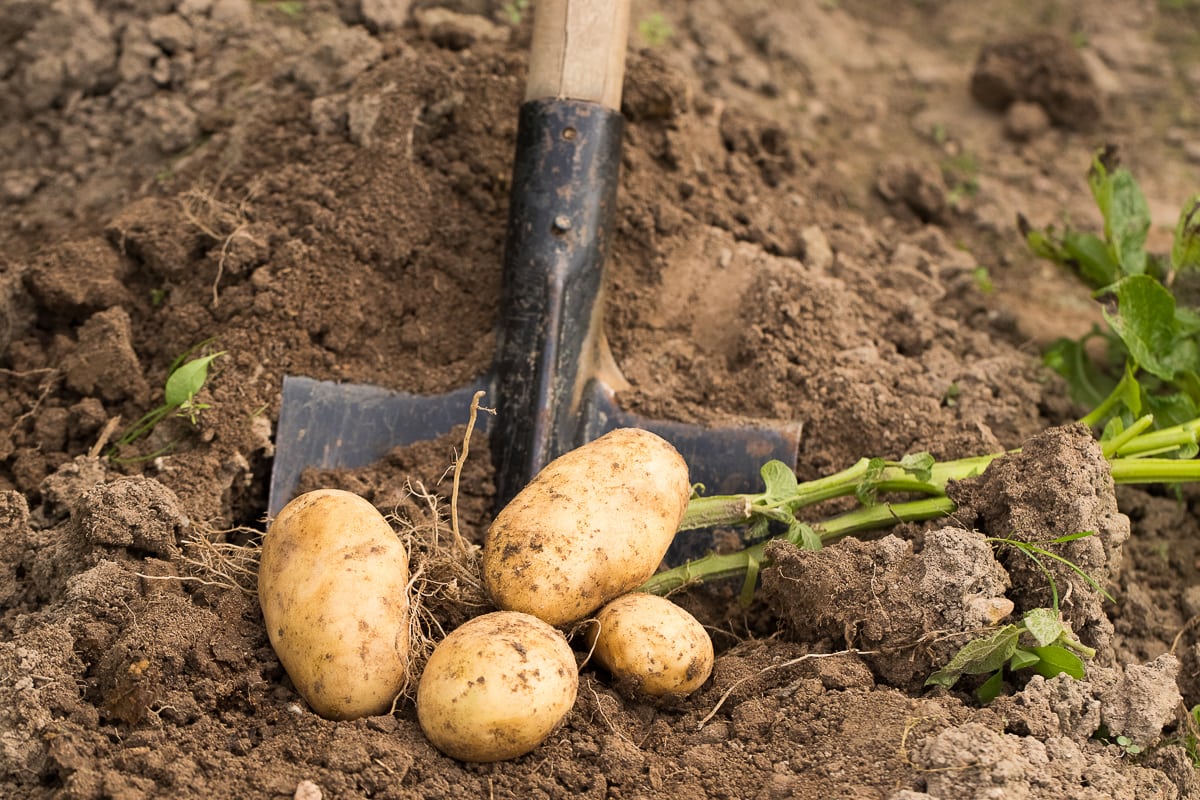
If you’re growing them in the ground, feel around to locate the potatoes, then dig a few inches out from where they end to loosen the soil and lift them out. For containers or grow bags, you can dump everything into a wheelbarrow or onto a tarp and sort the potatoes from the dirt by hand.

How to cure potatoes
Once you’ve dug up your potatoes, you must let them cure if you won’t be using them right away.
Curing potatoes helps toughen the skins and allows them to be stored longer. To cure potatoes, store them in a dark place at a temperature between 45–60°F with high humidity for about 1 to 2 weeks.
If you’re planning to store them, don’t wash the potatoes. You can gently brush off any loose dirt, but leaving the skins with a bit of dirt as they cure is best. If you’re going to use them right away, it’s okay to wash them.

Leave a Reply